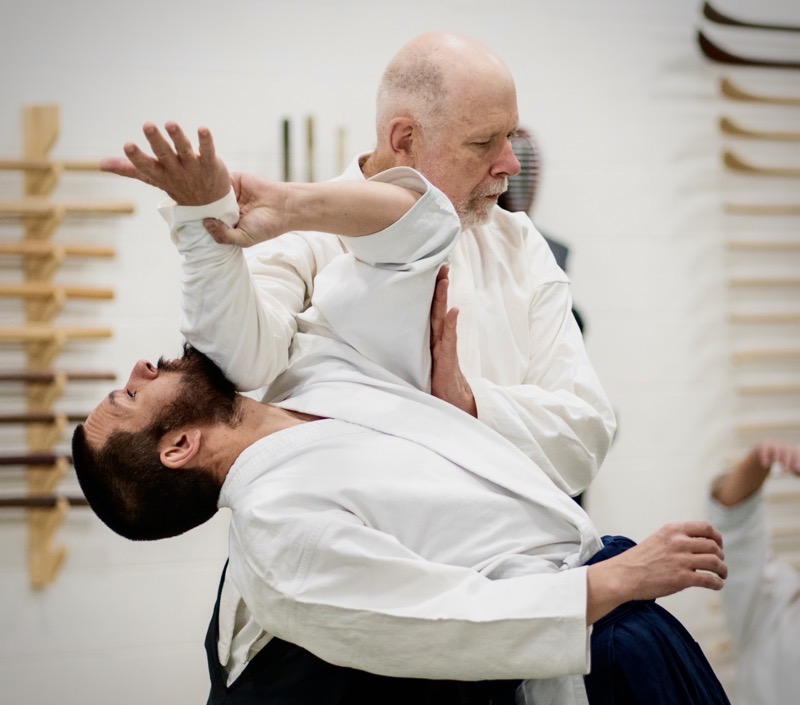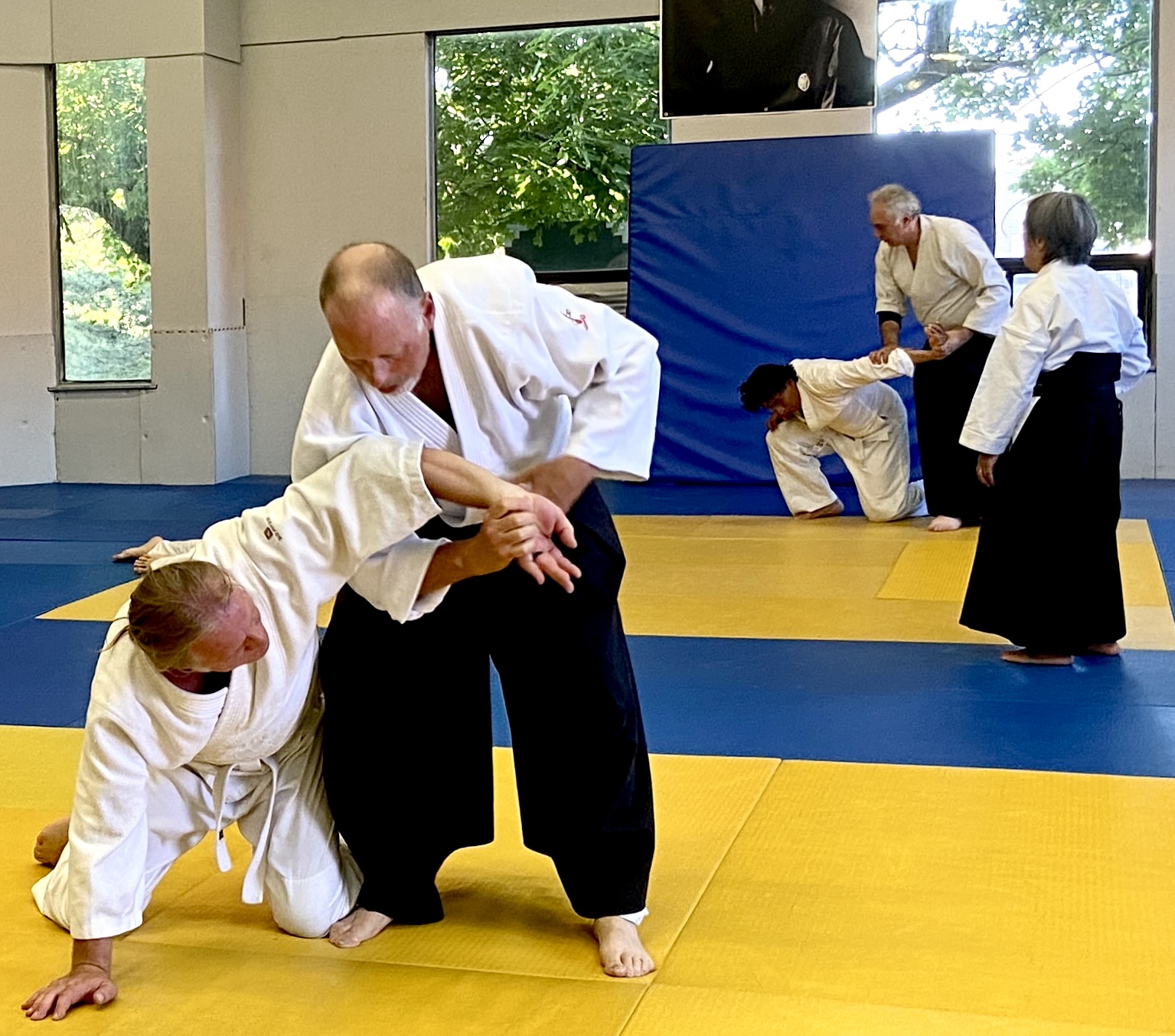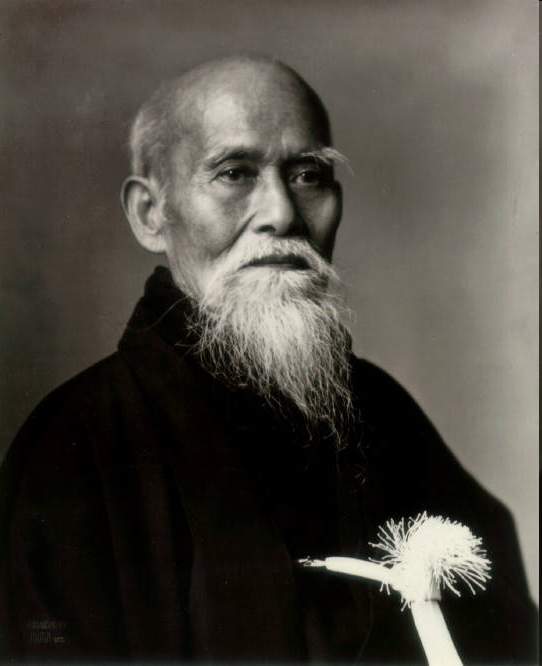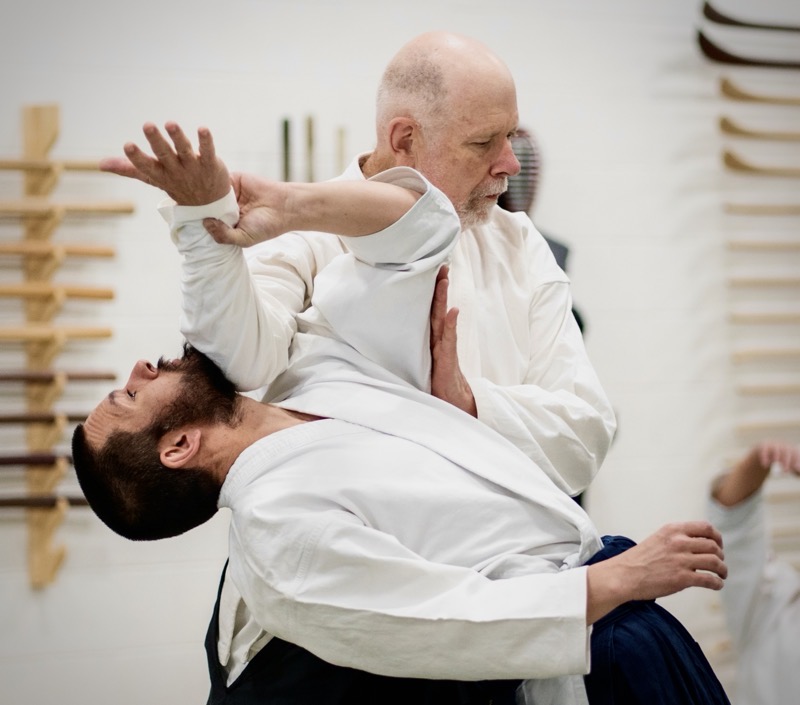
I don’t pretend to be an expert on kokyu/ryoku, the source of power in Aikido, but I’m very interested in it and I wanted to share some observations.
I don’t think that kokyu is well understood by many students. It is often translated as “breath.”
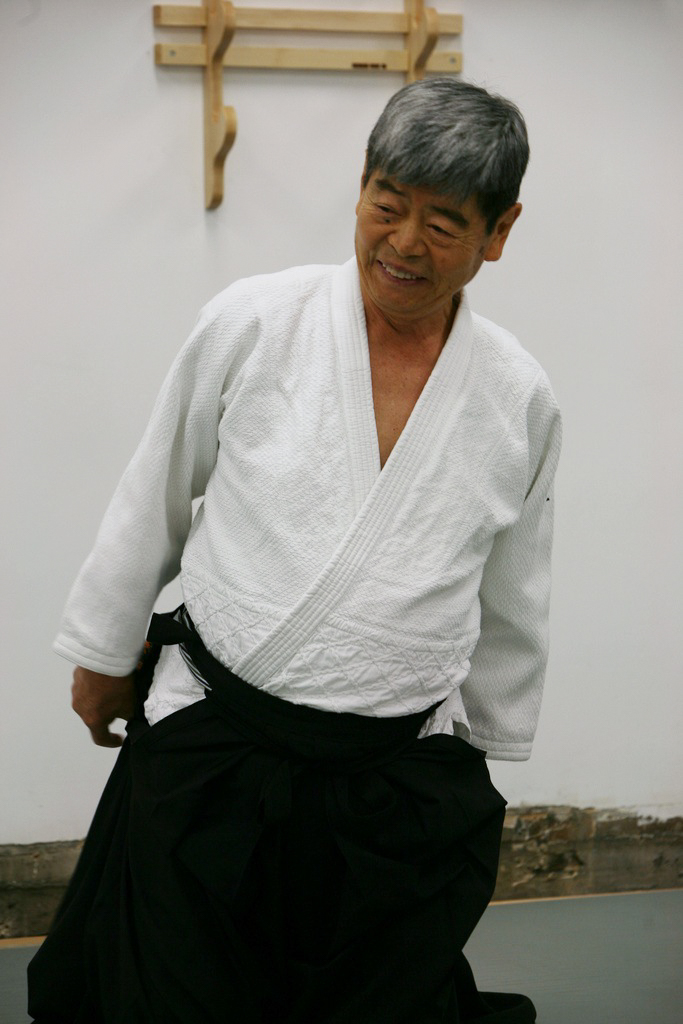
At a seminar years ago, Sugano-sensei taught kokyu nage. He was watching the students practice and looked a little perplexed. He asked me, “Why are so many of them breathing funny?” I said I guessed it was because it was kokyu nage and they were trying to exhale strongly during the throw. He laughed and said, “Kokyu is not that kind of breathing. In the Aikido context, kokyu mainly means timing.”
At the same seminar, Sugano-sensei led a warmup that clearly included deep breathing in what seemed like an unusual way. I asked him if it was a special breathing exercise. He looked at me with concern, and said, “I don’t do breathing exercises.” He added, “Do you really need to practice breathing?”
I have been thinking about those comments and many others he made ever since.
Concepts of breathing are very different in the West and the East.
In the West, breathing is mainly about the lungs and blood oxygen.
In the East, the understanding is very different. In Aikido, Qi Gong, Yoga and many other disciplines, it seems to me like the breath is viewed as a bridge that connects the mind and body to the energy of the universe. To inhale is to take vital energy into the whole body from your surroundings, not just inflate your lungs. It exists in the context of your environment, your partner, your body.
“Ryoku” is sometimes translated as “power” or “force.” It does not mean physical strength.
Ryoku is releasing the energy you took in with kokyu — full-body energy. It is relaxed and potent. It is the yang to kokyu’s ying. Visualizing this is very important during practice.
While kokyu/ryoku is fundamental to every technique we do, there are two specific exercises for building it up.
One is morotedori kokyuho, which should be practiced regularly, at every class if possible. This should be practiced with a partner who is holding solidly, with a strong centre. You are trying to learn to relax, lower your center, position and integrate your body correctly and extend energy properly with correct timing to disrupt your partner’s balance.
By the way, in our Aikido curriculum, the word “kokyuho” is used to name many techniques that look similar to but are not focused on this specific practice. Some people call those other techniques sokumen iriminage. Kokyu/ryoku is still involved, but they are techniques, not exercises.
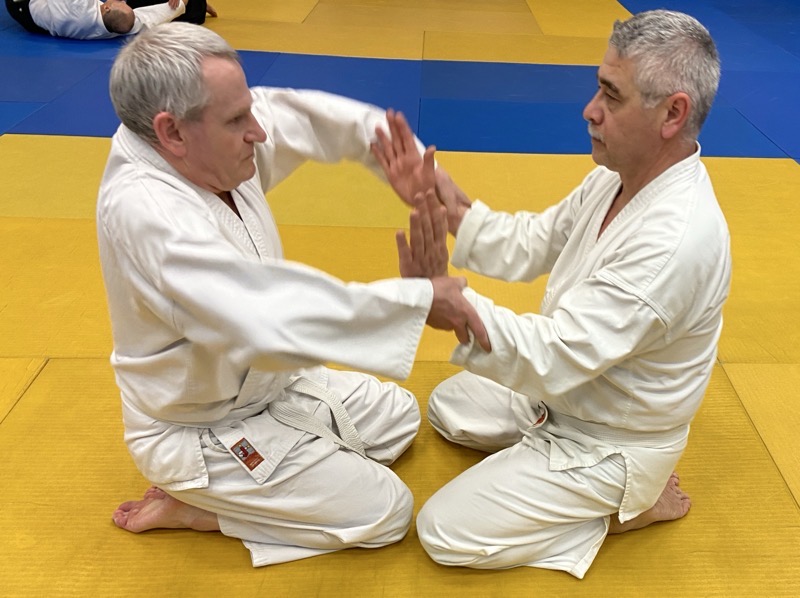
The other important kokyu/ryoku exercise is kokyu dosa, which we practice seated at the end of every class. This is not a cooldown. It should be practiced with great awareness. In Aikido there are many different ways of practicing kokyu dosa, but all the same points as for morotetori kokyuho apply.
And again, some seated ryotetori techniques are actually waza, not exercises focusing on strengthening kokyu/ryoku.
With consistent practice of kokyu/ryoku, your technique will become centred, relaxed and explosive through timing and extension. You will be better able to connect with your partner and match his or her ki.
I certainly don’t consider myself to be an expert on this topic. But I wanted to share my experiences with you, simply to clarify some of the concepts of power in Aikido that you hear in the dojo.